
生物力学_Friction, Lubrication, and Wear
Friction, Lubrication, and Wear
- basic
- Learning Objectives
- Understand surface properties that affect friction and wear behavior.
- Review basic concepts of static and kinetic friction.
- Understand the different types of lubrication and wear, and where they are commonly found.
- Identify areas of concern for friction, lubrication, and wear in vivo.
- Know important design factors from the perspective of friction and wear concerns.
- Design Inquiry - Total Knee Replacement
- You are designing a total knee replacement, a high-load device for which wear is a major concern.
- Contact stresses of 40 MPa.
- 1 million fatigue cycles per year.
- Selecting a material that meets these demands and still maintains low wear is a team challenge.
- Key material-selection concerns
- low coefficient of friction
- low wear debris generation
- fatigue resistance under repeated joint loading
- biocompatibility of both bulk material and debris
- surface finish and lubricant compatibility
- Clinical Motivation
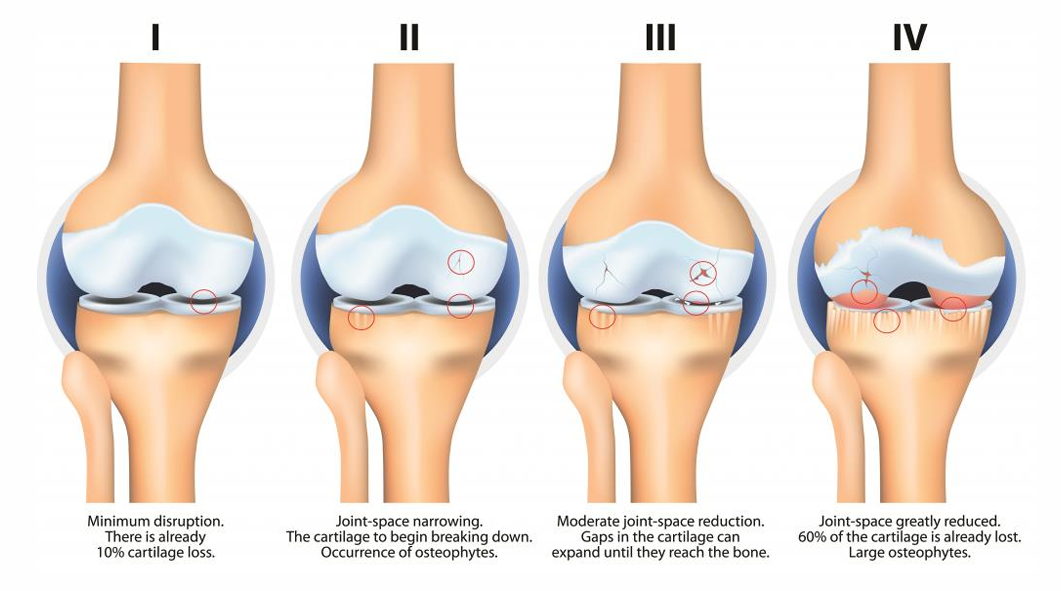
- Wear and Tear Arthritis
- Osteoarthritis (OA)骨关节炎 is the most common form of arthritis.
- It occurs most frequently in the hands, hips, and knees.
- With OA, the cartilage within a joint begins to break down and the underlying bone begins to change.
- 图 - OA links cartilage wear, bone change, and joint pain
- Wear Debris Cause Severe Outcome
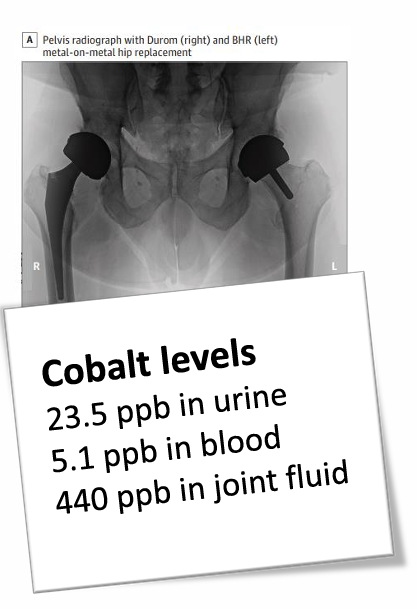
- A patient with metal-on-metal hip replacement presented tremor, fatigue, forgetfulness, hip swelling, and stiffness.
- Cobalt levels
- 23.5 ppb in urine
- 5.1 ppb in blood
- 440 ppb in joint fluid
- Where does the Cobalt come from?
- 图 - pelvis radiograph with metal-on-metal hip replacement and cobalturia article
- Wear and Tear Arthritis
- Tribology摩擦学
- Tribology is the field of friction, lubrication, and wear.
- When designing devices that contact other materials, it is necessary to consider friction, lubrication, and wear.
- Orthodontic implants正畸植入物
- 比如牙套braces
- A smooth surface to arch wires is very important.
- Frictional forces can reduce the amount of force applied to teeth by 50% or more.
- Interface characterization determines friction and wear behavior
- composition of the articulating materials
- surface finishes
- lubricant, if any
- Learning Objectives
- Bulk and Surface Properties
- basic
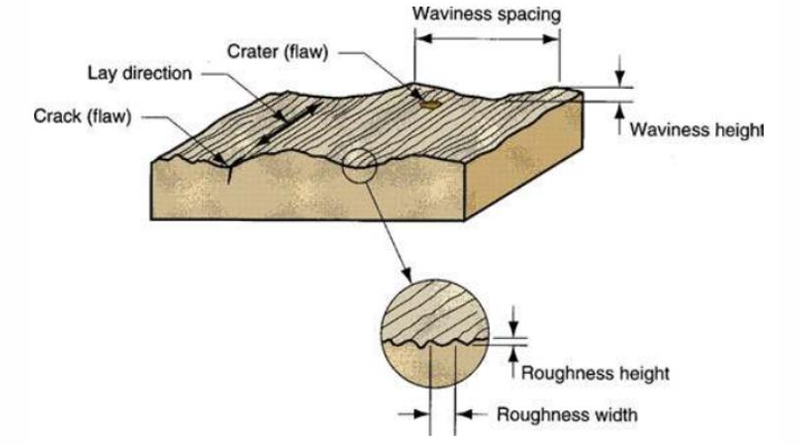
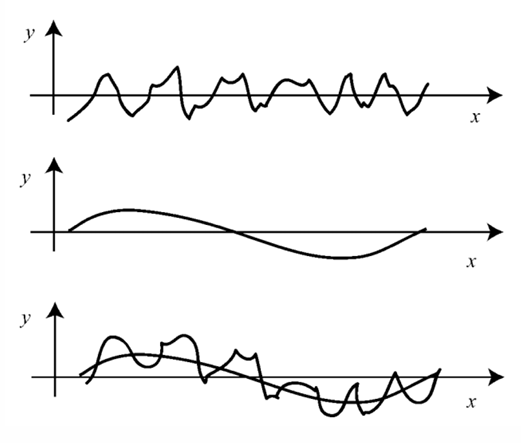
- Surface texture is the repetitive and/or random deviations from the nominal surface of an object.
- surface profile = error of form + waviness + roughness

- roughness粗糙度
- S < 1 mm
- small, finely-spaced deviations from nominal surface
- determined by material characteristics and processes that formed the surface
- waviness波纹度
- 1 ≤ S ≤ 10 mm
- deviations with much larger spacing
- caused by work deflection, vibration, tooling, etc.
- Roughness is superimposed on waviness.
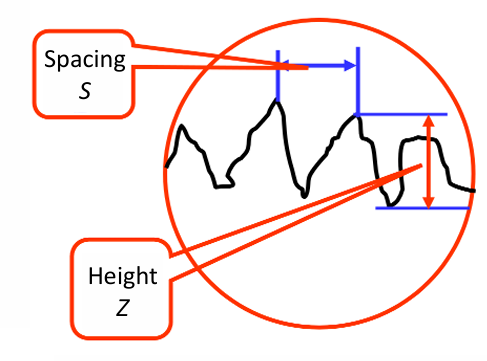
- spacing S and height Z describe local topography.
- Surface texture is the repetitive and/or random deviations from the nominal surface of an object.
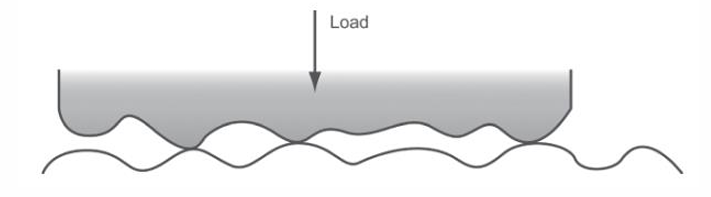
- Asperities微凸体 and Real Area of Contact
- As two surfaces come into contact, the actual contact comes at asperities, small peaks on each imperfect surface.
- Asperities are commonly modeled as hemispherical elastic contacts
- real area of contact, Ar 真实接触面积
- Ar differentiates asperity contacts from the apparent contact area.
- A surface with high roughness can have a smaller Ar than a smoother surface.
- Ar can change during sliding contact as asperities undergo deformation and/or wear.
- For hard rough surfaces under moderate load, Ar may be only 15-20% of the apparent contact area.
- As two surfaces come into contact, the actual contact comes at asperities, small peaks on each imperfect surface.
- Roughness Metrics
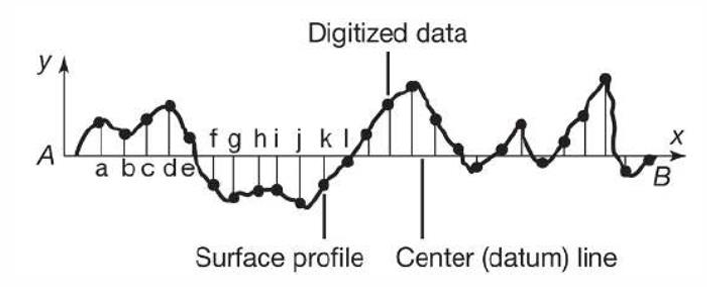
- A curve from a single roughness measurement
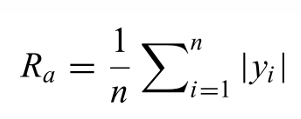
- average roughness Ra平均粗糙度
- formula
- yi is the distance from the profile to the mean line.
- The mean line is defined so that the area between the profile and the line is equal above and below.
- formula
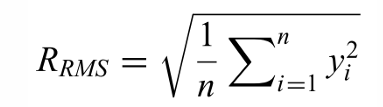
- RMS roughness RRMS均方根粗糙度
- formula
- RRMS is weighted by the square of the peak heights.
- RRMS can be more useful because Ra can have the same value for different topographies due to averaging.
- formula
- Surface topography should use roughness values together with waviness measurements.
- RRMS ≥ Ra
- A curve from a single roughness measurement
- basic
- Friction
- Definition
- Friction is the resistance to relative motion between two surfaces.
- It is normally expressed as the coefficient of friction, μ
- μ expresses the ratio between lateral and normal force in a simple friction test.
- For general cases
- μ = FS / FN
- FS is shear force.
- FN is normal force.
- Static and Kinetic Friction
- static friction静摩擦
- μs
- friction between non-moving surfaces
- kinetic friction动摩擦
- μk
- friction between moving surfaces
- The static coefficient of friction is higher than the kinetic coefficient of friction.
- static friction静摩擦
- Friction Mechanisms
- Friction can be thought of as a combination of adhesion and deformation.
- adhesion粘着
- asperities have become attached
- deformation变形
- asperities from one surface must slide past asperities of the opposing surface
- Coefficient of friction is proportional to the normal force applied on the object.
- It is generally independent of apparent contact area and velocity in the simplified model.
- Definition
- Lubrication
- Definition and Benefit
- Lubrication is the use of a film or layer to separate opposing surfaces during relative motion.
- The primary benefit is to reduce the opportunity for damage by preventing direct contact between surfaces.
- Lubricants can be
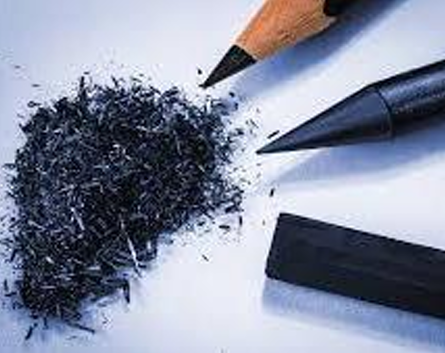
- solid lubricants, such as graphite
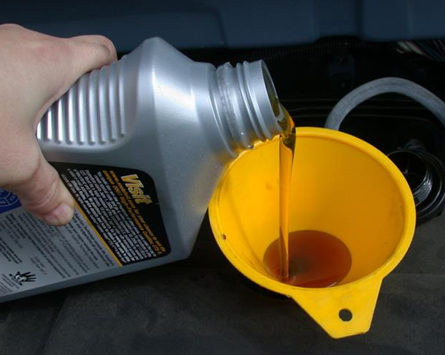
- liquid lubricants, such as synovial fluid or lubricating oil
- gas lubricants, such as air bearings
- solid lubricants, such as graphite
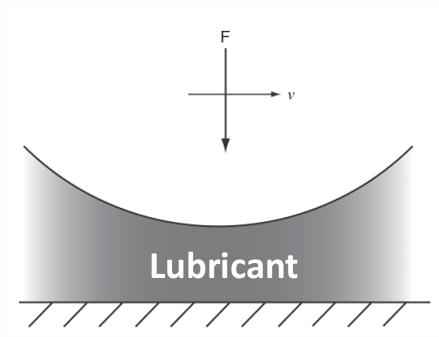
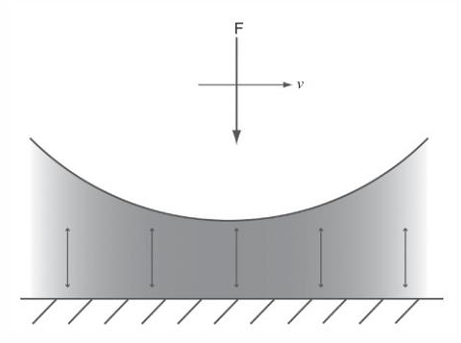
- Hydrodynamic Lubrication流体动压润滑
- most common type of lubrication
- Relative motion between the two surfaces draws the lubricant into the contact area.
- The surface separation is usually 10^-3 - 10^-4 cm.
- The surfaces are completely separated with no asperity contact.
- This lubrication scheme is considered ideal because the potential for surface damage is minimal.
- 图 - moving surface pulls lubricant into a wedge-shaped contact gap
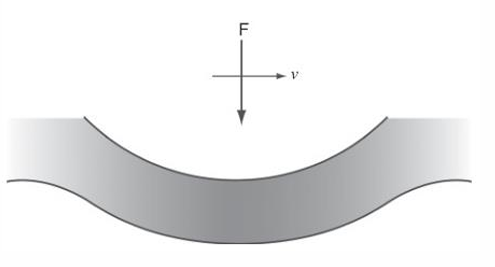
- Elastohydrodynamic Lubrication弹流润滑
- characterized by 10^-4 - 10^-5 cm separation.
- The normal load is transmitted through the lubricant.
- At least one surface undergoes elastic deformation.
- This process may result in localized fatigue over long-term use.
- Because film thickness is small, it may be on the same order of magnitude as surface roughness.
- 图 - loaded contact deforms elastically while a thin lubricant film carries load
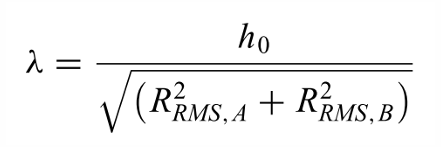
- lambda parameter λ 膜厚比
- 由于弹流润滑中的膜厚非常小,有必要质疑它是否与表面粗糙度处于同一数量级,这个参数就是λ
- formula
- h0 is the film thickness in meters.
- RRMS is the RMS roughness for materials A and B.
- λ compares lubricant film thickness with combined surface roughness.
- Squeeze Film Lubrication挤压膜润滑
- In squeeze film lubrication, a highly viscous lubricant has its own elastic response to loading.
- It appears during transient overloads.
- Example - sudden increase in load in the human knee.
- 突然一压,液体来不及完全流走,就短时间帮忙承载
- In squeeze film lubrication, a highly viscous lubricant has its own elastic response to loading.
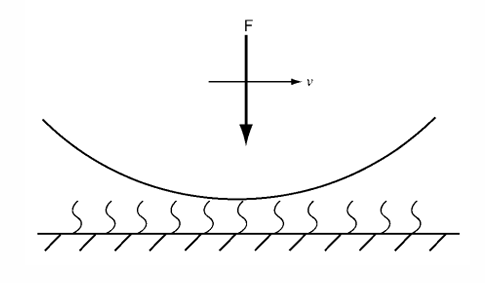
- Boundary Lubrication边界润滑
- Boundary lubrication is demonstrated when the lubricant is a solid or gel coating on one or both surfaces.
- It differs from simply having a low-shear fluid interface. Boundary lubrication is found in high-pressure, low-velocity situations.
- Surface separation is usually less than 10^-5 cm.
- Boundary coating protects asperities when fluid film is too thin.
- Boundary lubrication is demonstrated when the lubricant is a solid or gel coating on one or both surfaces.
- Mixed Lubrication混合润滑
- Mixed lubrication occurs when multiple lubrication models are present simultaneously.
- A primary lubrication mode such as hydrodynamic lubrication is supplemented by additional protection from coating or other factors.
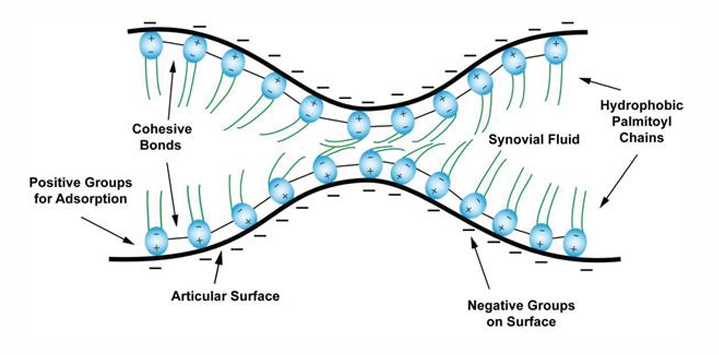
- Example - articular cartilage = boundary lubrication + elastohydrodynamic lubrication + squeeze film + coating
- 现实关节通常不是单一机制,而是 fluid pressure + surface coating 一起工作
- Synovial Fluid滑液
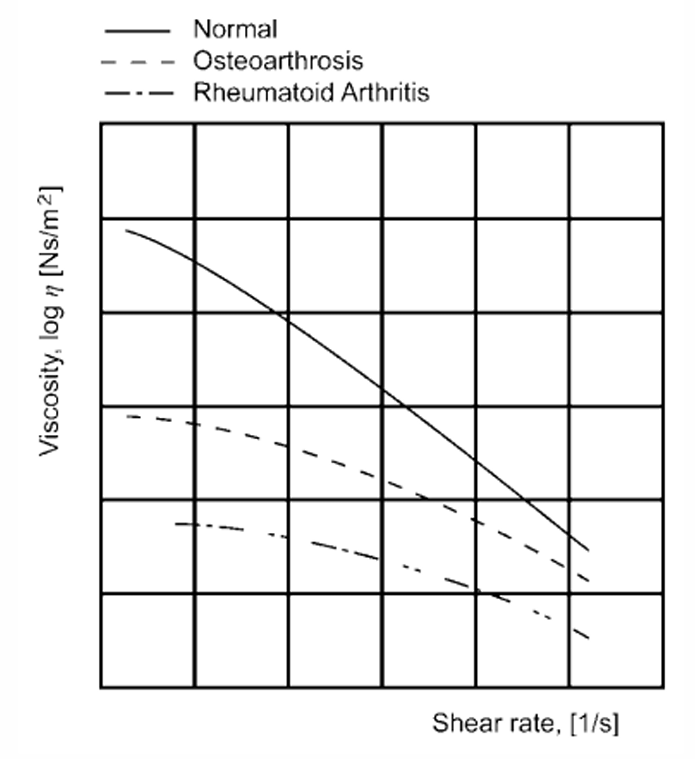
- Synovial fluid, also known as joint fluid, is a thick liquid located between joints.
- The fluid cushions the ends of bones and reduces friction when joints move.
- It is rheopectic, meaning that it becomes less viscous during shear motion.
- The viscosity of synovial fluid decreases as a result of disease or trauma.
- Lower viscosity synovial fluid leads to higher rates of cartilage-on-cartilage contact and joint damage.
- Molecular Lubricants
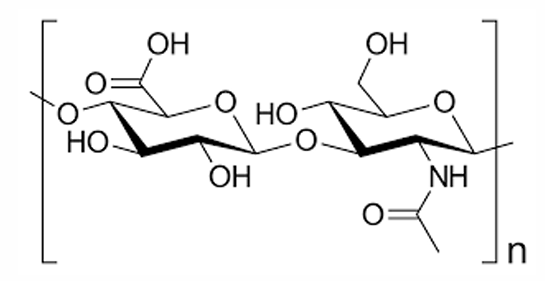
- Hyaluronic Acid (HA)透明质酸
- A naturally occurring glycosaminoglycan in synovial fluid.
- Acts as a lubricant and shock absorber for joints.
- Contributes to the viscoelasticity of synovial fluid.
- Protects cartilage from friction-induced damage.
- A naturally occurring glycosaminoglycan in synovial fluid.
- Lubricin润滑素
- A glycoprotein that works alongside HA to reduce friction between cartilage surfaces.
- Phospholipid磷脂
- Provides boundary lubrication by forming a thin film on cartilage surfaces.
- Hyaluronic Acid (HA)透明质酸
- Definition and Benefit
- Wear
- basic
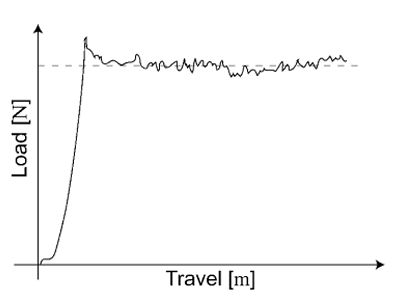
- Wear is the unwanted removal of material from solid surfaces by mechanical action.
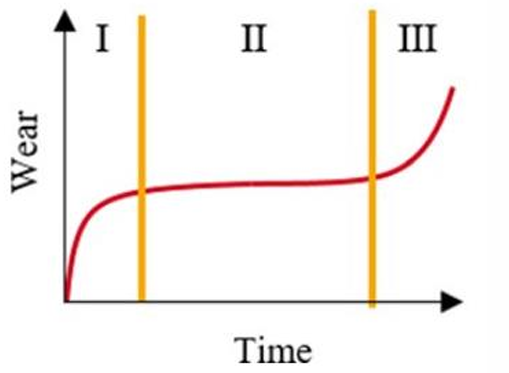
- Three stages of wear
- 图
- running in跑合期
- initial period where surfaces adapt to each other
- wear rates may be higher
- steady-state wear稳定磨损期
- period of stable wear rates
- device functions within expected parameters
- catastrophic wear灾难性磨损
- sudden, significant wear or failure
- often leads to device malfunction or breakdown
- 图
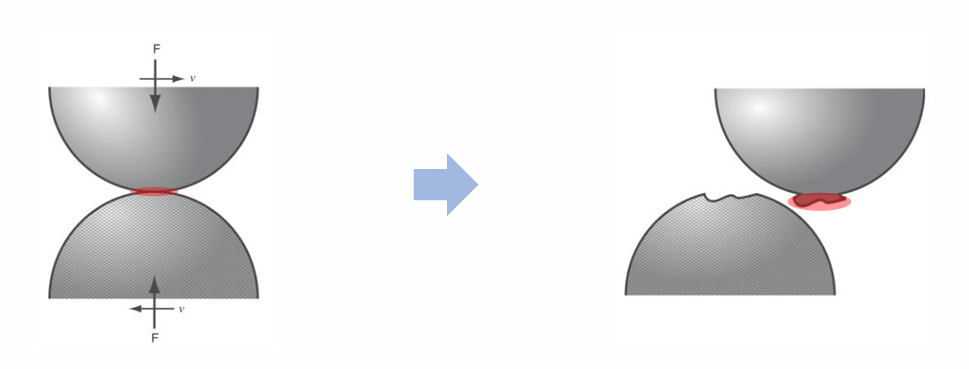
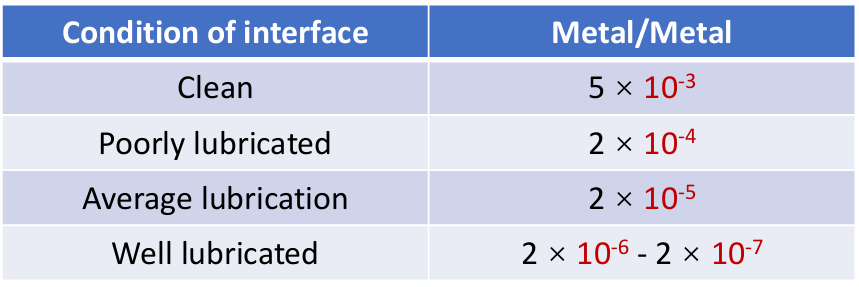
- Adhesive Wear 粘着磨损
- accounts for nearly half of all wear.
- Fragments from one surface are pulled off and adhered to the second surface.
- Particles tend to be 10-100 μm in diameter.
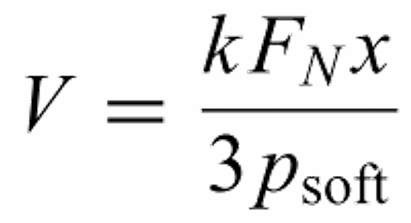
- Adhesive wear volume, V
- formula
- V is adhesive wear volume.
- k is Archard’s coefficient.
- psoft is the Vickers hardness of the softer material, the softer material is more likely to lose volume to wear debris
- x is total sliding distance.
- formula
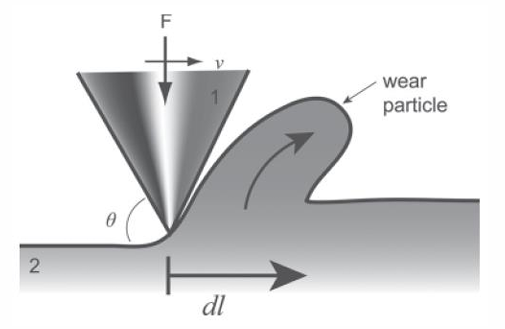
- Abrasive Wear 磨粒磨损
- the second most common type of wear
- It occurs when hard asperities remove material from a softer surface.
- Main processes
- plowing犁削
- cutting切削
- cracking开裂
- Abrasive wear particles are typically 2-3 orders of magnitude larger than adhesive wear particles.
- Abrasive wear can be beneficial in polishing.
- two-body abrasion二体磨损
- only the two counterfaces are involved
- 仅涉及两个接触面
- three-body abrasion三体磨损
- two counterfaces plus unconstrained grains of material
- loose wear debris can become abrasive particles
- 两个接触面加上不受约束的材料颗粒
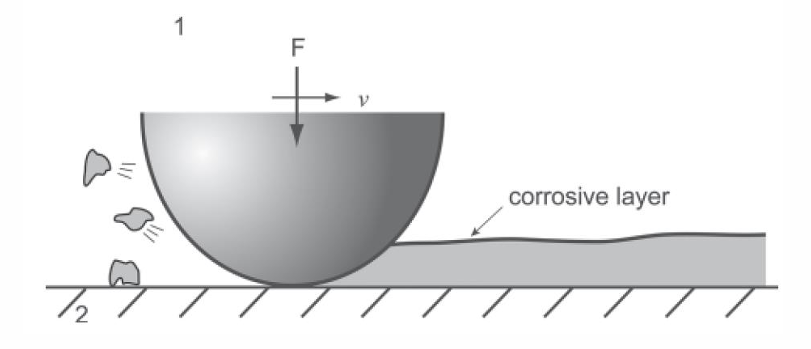
- Corrosive Wear 腐蚀磨损
- 图
- 2 types
- A brittle oxide corrosion layer is removed from its corresponding surface, resulting in pitting点蚀
- Gradual removal of a coherent corrosion layer, this leads to general topography change.
- Corrosive wear can be controlled by careful attention to lubricant and environment.
- 图
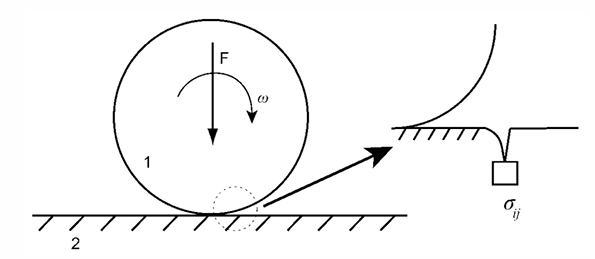
- (Rolling)Contact Fatigue (滚动)接触疲劳
- Contact fatigue, or rolling contact fatigue, is material removal due to near-surface alternating stresses induced through rolling.
- This type of wear is common in bearings and gears.
- The contact can be conforming or non-conforming.
- Near-surface stress field in elastic materials is often approximated using Hertzian contact theory.
- Contact fatigue can take place in addition to other wear mechanisms.
- Contact fatigue, or rolling contact fatigue, is material removal due to near-surface alternating stresses induced through rolling.
- Erosive Wear 冲蚀磨损
- Erosive wear involves removal of material from a surface bombarded轰击 by liquid or solid particles.
- Removed volume depends on
- particle velocity
- particle shape
- particle mass
- impingement angle冲击角
- Erosive wear is maximized at 30-90° to the surface, depending on the material.
- It is commonly seen in high-velocity flow situations such as valves.
- It is not generally an issue in vivo.
- Erosive wear involves removal of material from a surface bombarded轰击 by liquid or solid particles.
- Fretting Wear 微动磨损
- Fretting wear is material removal when two contacts under load also experience minute reciprocating or vibrating motion.
- Sliding motion can range from 20-200 μm.
- Wear debris from fretting can contribute to further material degradation as abrasive wear particles.
- Fretting is usually a combination of corrosive and abrasive wear.
- Fretting wear is material removal when two contacts under load also experience minute reciprocating or vibrating motion.
- Delamination Wear 分层磨损
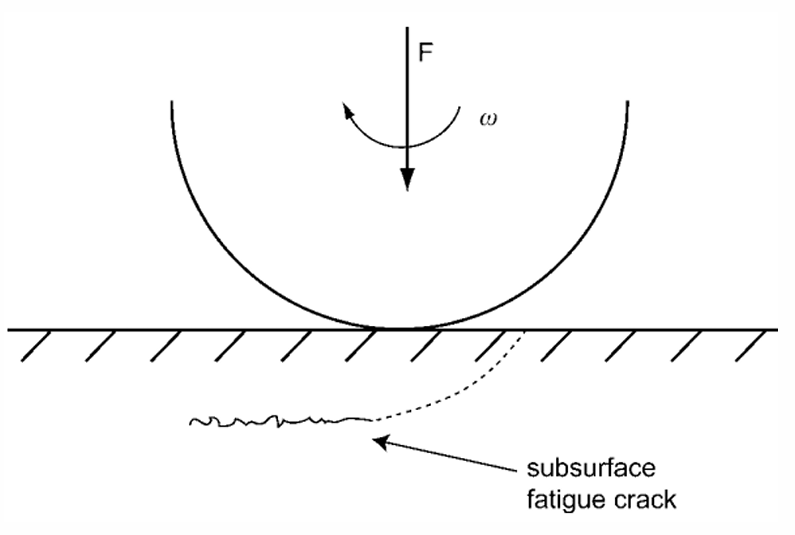
- Delamination wear occurs under conditions somewhat similar to contact wear
- During loaded rolling or sliding, subsurface stresses develop in a material.
- A void or imperfection grows into a crack parallel to the surface.
- Ultimately, this piece of material delaminates分层剥离
- Delamination wear is characterized by large, thin wear particles.
- It is more common in layered materials, but can also occur in homogeneous objects.
- basic
- Case Study
- Biomimetic Cartilage-Lubricating Polymers
- Nature Biomedical Engineering article.
- Biomimetic cartilage-lubricating polymers regenerate cartilage in rats with early osteoarthritis.
- DOI: 10.1038/s41551-021-00785-y
- The case links lubrication polymer design with cartilage repair and friction reduction.
- Natural Cartilage Lubrication Layer
- Normal joint has synovial fluid and a lubrication layer on cartilage.
- Layer components shown in the figure
- lubricin
- phospholipid
- HA
- fibronectin
- Coll II
- Brush-like lubrication complex
- polymer brushes project from HA backbone
- hydrated brush layer reduces friction between cartilage surfaces
- 图 - natural joint lubrication layer uses HA, lubricin, phospholipid, and collagen-associated matrix
- Synthetic Strategy
- HA/PA and HA/PM polymers are designed to form brush-like lubrication complexes.
- Solution of HA/PA, HA/PM, or both is injected into a knee joint in a rat model of early OA.
- The polymers assemble into a lubrication layer on cartilage surface.
- Treated knee joint aims to recover a low-friction interface.
- 图 - injection into rat knee, assembled lubrication layer, treated knee joint
- Friction Test Setup
- Cartilage samples are immersed in lubrication solution in a Petri dish.
- A parallel plate applies load and rotational sliding.
- Stainless baseplate supports the sample.
- The setup measures friction coefficient of treated and normal cartilage.
- pre-sliding time
- 1.2 s
- 12 s
- 120 s
- 1,200 s
- Groups compared
- PBS
- HA
- HA/PA
- HA/PM
- HA/PA+HA/PM
- Graph Reading
- Treated cartilage kinetic friction
- PBS is highest, around 0.02-0.025.
- HA is lower, around 0.013-0.015.
- HA/PA, HA/PM, and HA/PA+HA/PM are lower, roughly around 0.005-0.009.
- HA/PA+HA/PM gives one of the lowest kinetic friction levels.
- Treated cartilage static friction
- PBS and HA are higher than polymer-brush groups.
- HA/PA, HA/PM, and HA/PA+HA/PM keep static friction lower across pre-sliding times.
- Longer pre-sliding time tends to increase static friction in several groups.
- Normal cartilage friction
- Normal cartilage kinetic friction is lower overall than treated cartilage PBS.
- Polymer groups approach the low-friction range of normal cartilage.
- For normal cartilage static friction, HA/PA+HA/PM is generally among the lowest groups.
- Main conclusion
- Biomimetic brush-like polymers reduce both kinetic and static friction compared with PBS and HA alone.
- Combined HA/PA+HA/PM treatment provides strong lubrication performance.
- Treated cartilage kinetic friction
- Biomimetic Cartilage-Lubricating Polymers
- Design Factors for Low-Wear Implants
- Material pair selection
- avoid high wear coefficient material pairs under high load
- consider softer material hardness psoft because adhesive wear volume scales inversely with psoft
- wear debris biocompatibility matters as much as bulk material biocompatibility
- Surface engineering
- control roughness and waviness together
- avoid high asperity contact and small real contact area concentration
- surface coatings can provide boundary lubrication under high-pressure, low-velocity conditions
- Lubrication design
- maintain enough fluid film thickness relative to RMS roughness
- use λ to compare film thickness and combined surface roughness
- in vivo joints often need mixed lubrication instead of a single ideal lubrication mode
- Wear-risk control
- reduce adhesive and abrasive wear through lubrication and surface finish
- consider fatigue and delamination under repeated cycles
- prevent fretting at modular interfaces where small vibration under load can occur
- Material pair selection
- Take-Home Message
- What are roughness and waviness?
- Roughness: S < 1 mm, small, finely-spaced deviations from nominal surface.
- Waviness: 1 ≤ S ≤ 10 mm, larger-spacing deviations caused by work deflection, vibration, tooling, etc.
- Roughness is superimposed on waviness.
- How to calculate Ra and RRMS?
- Ra = 1/n Σ|yi|
- RRMS = sqrt(1/n Σ yi^2)
- Ra averages absolute profile deviations; RRMS weights high peaks more strongly.
- Describe different types of lubrication.
- Hydrodynamic lubrication: relative motion draws lubricant into contact; 10^-3 - 10^-4 cm separation; no asperity contact.
- Elastohydrodynamic lubrication: 10^-4 - 10^-5 cm separation; load transmitted through lubricant; elastic surface deformation.
- Squeeze film lubrication: viscous lubricant responds during transient overloads.
- Boundary lubrication: solid or gel coating; high pressure and low velocity; separation less than 10^-5 cm.
- Mixed lubrication: multiple modes coexist, as in articular cartilage.
- Describe different types of wear.
- Adhesive wear: fragments pulled from one surface and adhered to another; particles 10-100 μm.
- Abrasive wear: hard asperities remove softer material by plowing, cutting, or cracking.
- Corrosive wear: corrosion layer removal causes pitting or topography change.
- Contact fatigue: rolling-induced alternating near-surface stresses remove material.
- Erosive wear: liquid or solid particle bombardment removes material.
- Fretting wear: small reciprocating or vibrating motion under load; sliding 20-200 μm.
- Delamination wear: subsurface crack grows parallel to surface and a thin sheet peels off.
- Why does tribology摩擦学 matter in vivo?
- OA and implant wear show that surface damage can create tissue degeneration, debris, inflammation, and systemic metal ion exposure.
- Low-wear design must combine material properties, surface topography, lubricant behavior, and biological response.
- What are roughness and waviness?
All articles in this blog are licensed under CC BY-NC-SA 4.0 unless stating additionally.